
How to Plan Corporate Event Transportation for Flights, Hotels, and Venues
Corporate event transportation should not be treated as one vehicle booking.
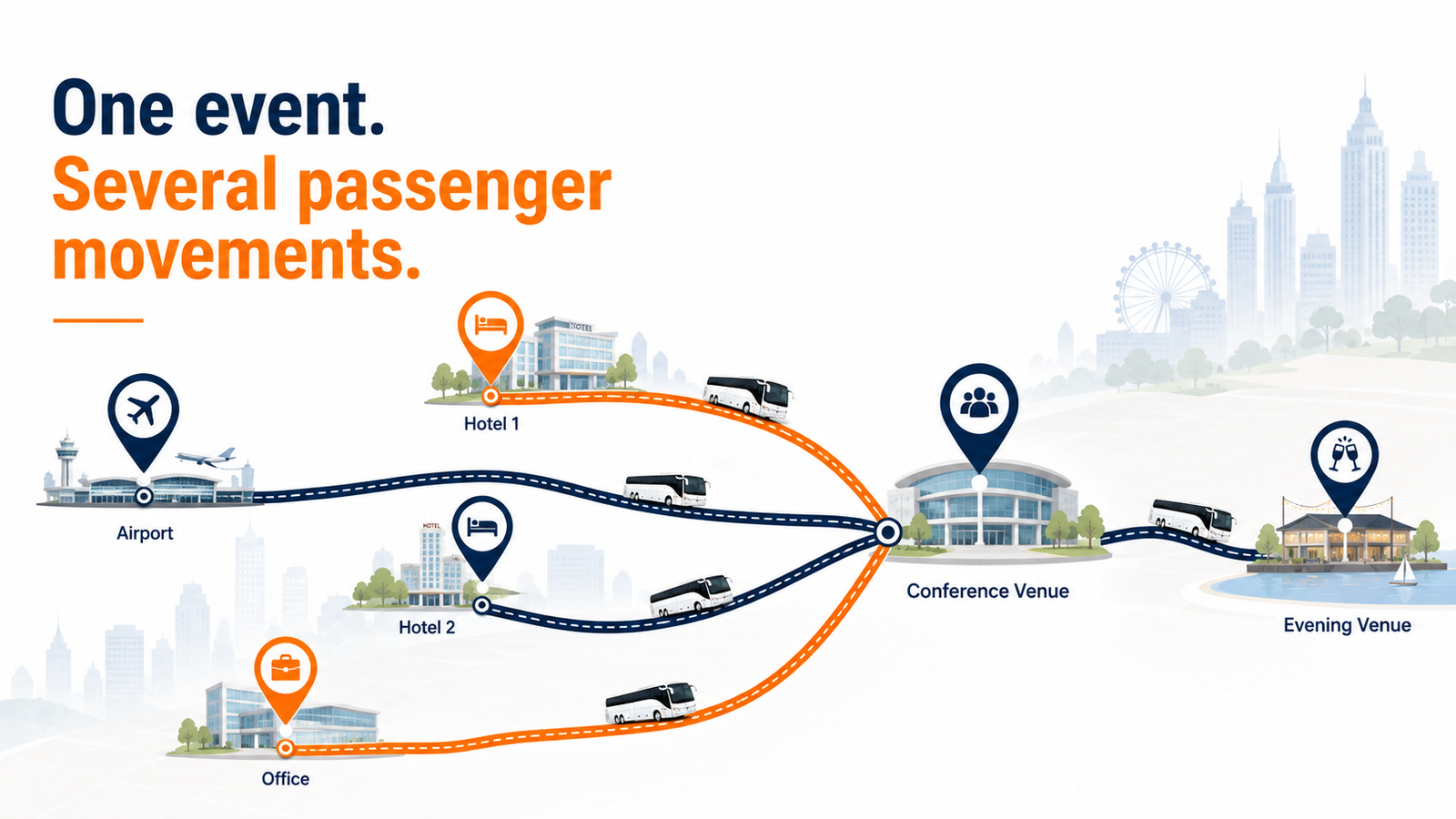
A single event may involve airport arrivals, hotel transfers, employees travelling from an office, executive pickups, conference shuttles, off-site dinners, and staggered departures. Each movement can involve different passengers, timings, luggage requirements, and vehicle sizes.
That is why effective corporate transportation services begin with a movement plan rather than a headcount.
The goal is to understand who needs to travel, where they are starting, when they must arrive, and what could delay the journey. Once those details are clear, the right vehicles and shuttle schedules become easier to organise.
Start With a Passenger Movement Map
Before choosing a corporate bus rental, divide attendees into travel groups.
A 200-person conference does not necessarily require one vehicle carrying 200 people. Some attendees may arrive by air, others may stay at different hotels, and employees may travel directly from the office.
A passenger movement map helps planners identify each separate journey.
|
Passenger group |
Starting point |
Destination |
Required arrival time |
Estimated passengers |
|
Airport arrivals |
Airport terminal |
Event hotel |
2:00 PM |
35 |
|
Hotel delegates |
Hotel lobby |
Conference venue |
8:30 AM |
80 |
|
Executive team |
Head office |
Venue entrance |
9:00 AM |
8 |
|
Evening attendees |
Conference venue |
Dinner venue |
7:00 PM |
60 |
This format makes capacity gaps and timing conflicts easier to identify. It also prevents the common mistake of using total event attendance as the basis for every vehicle decision.
Practical rule: Build the transport plan around passenger movements, not the total number of event attendees.
Choose the Right Corporate Shuttle Service Model
Once the journeys have been mapped, decide how each passenger group should move.
A direct transfer works well when passengers leave one location together and travel to the same destination. Common examples include airport-to-hotel transfers, office-to-venue journeys, and conference-to-dinner transport.
A continuous corporate shuttle service may be more effective when attendees arrive or leave at different times. Vehicles can operate between hotels, parking areas, and event venues at planned intervals rather than waiting for one full passenger group.
Staggered departures are useful when conference sessions finish at different times or when guests are divided into workshops, networking events, and evening activities.
Some events need a mixed transport model. A full-size coach may carry the main delegate group, while smaller vehicles support executives, speakers, employees, or late arrivals. This can be more practical than using the same vehicle type for every journey.
Match Vehicles to Each Journey
Vehicle selection should happen after the passenger movements and timings are clear.
Review corporate bus rental options according to passenger capacity, luggage, accessibility, journey duration, venue access, and departure frequency.
For example, 70 attendees may not need one 70-seat vehicle if half the group leaves earlier than the others. Two smaller departures may provide greater flexibility.
Airport transfers require particular attention. A group of 40 passengers with checked luggage may need more space than a standard 40-seat configuration provides. In that situation, one of the available full-size coach options may be more suitable.
Venue access should also influence the choice. A large coach may offer the right capacity but may not be able to enter a narrow hotel driveway, restricted city centre, or underground loading area.
The most suitable vehicle is the one that works for the complete journey, not simply the one with the closest seat count.
Connect Flight, Hotel, and Venue Timings
Corporate event transport often becomes unreliable when flights, hotels, and venue schedules are planned separately.
Flight arrival time is not the same as passenger pickup time. International travellers may need additional time for immigration, baggage collection, terminal transfers, and meeting the event coordinator.
Instead of assigning one vehicle to every arriving flight, group flights into practical arrival windows. This can reduce unnecessary waiting while still giving passengers enough time to reach the collection point.
Hotel operations also need to be considered. Check whether the group can board outside the main entrance, whether the vehicle must use a coach bay, and whether other events will be loading at the same time.
Venue arrival should be planned around registration, security, and walking time. Scheduling a coach to arrive when the programme begins creates unnecessary risk. Delegates should reach the venue early enough to disembark, enter the building, and complete registration.
Define Event-Day Transport Roles
A clear transport plan also requires clear ownership.
The event transport lead should oversee the complete movement schedule and approve operational changes. Pickup coordinators should manage passenger lists, communicate delays, and confirm when boarding is complete.
The venue contact should provide loading instructions, access permits, security procedures, and parking details. The transport provider should coordinate the vehicles, drivers, routes, and journey support.
The driver should not be expected to manage attendee registration, search for missing passengers, or decide whether the vehicle should wait beyond the agreed departure time.
Clear responsibilities reduce confusion when a flight is delayed, a passenger is missing, or the venue changes a loading area.
Prepare Instructions for Each Passenger Group
One general event email is rarely enough for a multi-location transport plan.
Airport arrivals, hotel guests, employees, executives, and evening attendees may all need different instructions. Each group should receive the exact pickup point, reporting time, departure time, vehicle identification, coordinator’s contact details, luggage guidance, and late-arrival procedure.
Clearly distinguish between “arrive by” and “departure time.” Passengers should know that the departure time is when the vehicle leaves, not when boarding begins.
For recurring employee transportation services or multi-day conferences, provide separate instructions for each day or route. This reduces the risk of passengers following an outdated schedule.
Plan for Changes Without Rebuilding Everything
Corporate events rarely run exactly as scheduled. Flights may arrive late, sessions may overrun, passenger numbers may change, and road access may be restricted without much notice.
A strong plan allows for these changes without affecting every journey.
Keep a small capacity buffer on important transfers. Separate essential journeys, such as airport and keynote speaker transfers, from optional movements. Confirm who can approve additional waiting time, route changes, or extra trips.
It is also useful to maintain one central transport schedule that records every pickup, vehicle, coordinator, and contact number. Updates should be communicated through the transport lead rather than several event team members contacting drivers independently.
Final Thoughts
Successful corporate event transportation depends on connecting every passenger movement into one operational plan.
Start with the journeys, then choose the shuttle model, vehicle capacity, timings, and event-day responsibilities. This approach helps avoid overcrowded vehicles, missed pickups, unclear departures, and unnecessary waiting.
Global Bus Hire supports corporate meetings, conferences, airport transfers, employee travel, and multi-location event transportation.
Once your passenger groups, routes, dates, luggage requirements, and venue details are ready, submit a route plan for a quote.
Frequently Asked Questions
What is the best way to organise a corporate shuttle service?
Start by grouping passengers according to their starting point, destination, and required arrival time. This will help determine whether direct transfers, continuous shuttle loops, or staggered departures are most suitable.
How many vehicles are needed for a corporate event?
The number depends on passenger movements rather than total attendance. A large event may need several smaller transfers when attendees arrive from different airports, hotels, or offices.
Is corporate bus rental suitable for airport transfers?
Yes. Corporate bus rental can support airport-to-hotel and airport-to-venue transfers. Flight times, terminals, luggage, waiting periods, and passenger meeting points should be confirmed before booking.
How should employee transportation services be planned?
Separate employees by office location, departure time, destination, and return schedule. Share clear pickup instructions, coordinator details, reporting times, and return transport arrangements.
What information does a corporate transport provider need?
Provide the event dates, passenger groups, pickup and drop-off points, required arrival times, luggage details, accessibility requirements, venue restrictions, and coordinator contacts.
Who should coordinate passengers on the event day?
A dedicated event transport coordinator should manage passenger lists, boarding, delays, and communication. The driver should focus on operating the vehicle and completing the agreed route safely.
